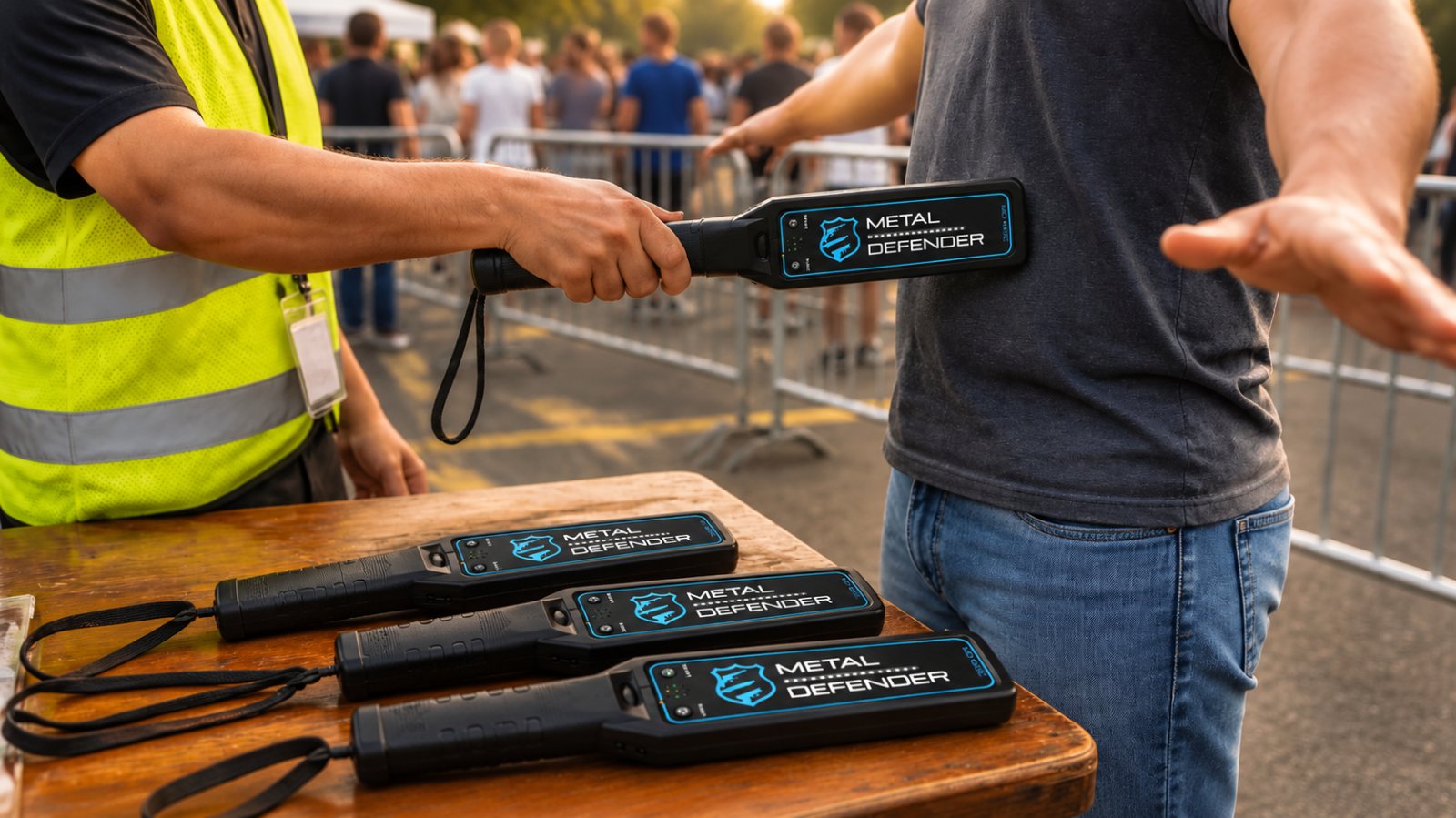
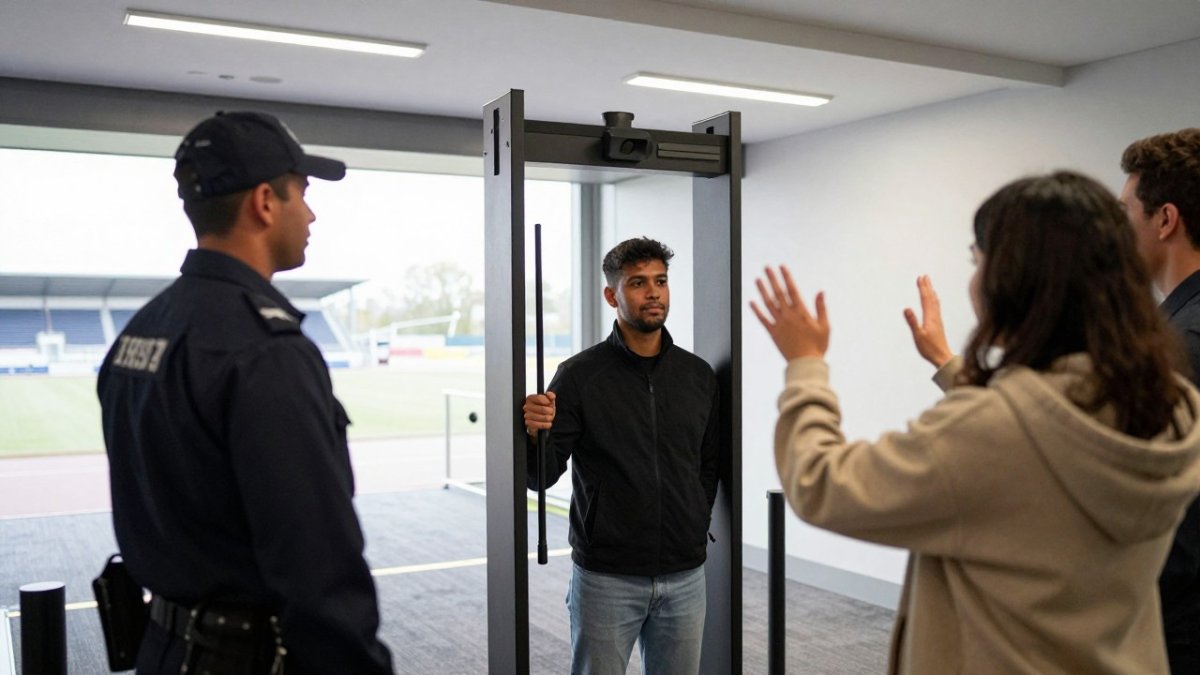
 blog
Garrett Alternative for Event Security: A Buyer's Guide
Last Updated: November 8, 2026
Quick Summary
A Garrett alternative for event security means matching detection equipment, throughput, and contract terms to how your venue operates, not just finding a cheaper wand. Renting or leasing walk-through and handheld detectors shifts screening to an operating expense, which often decides the choice for seasonal venues and tight capital budgets.
- Walk-through detectors deliver far higher patron throughput than handheld wands alone at event gates.
- Renting beats buying when screening days per year are low or the venue calendar is unpredictable.
- Compare cost per screened attendee at peak rather than cost per device when weighing units.
- A quote that omits setup, training, and support response time understates total cost.
- Match screening capacity to crowd size and risk: handhelds for small events, walk-through lanes for large ones.
Table of Contents
- Why Event Security Teams Look for a Garrett Alternative
- Comparison Table: Garrett vs. Other Screening Options for Venues
- Choosing a Hand Held Metal Detector for Security Checkpoints
- Walk-Through Security Metal Detectors: Throughput and Coverage
- What Drives Security Metal Detector Price and Total Cost of Ownership
- Metal Detector Rental for Events: When Renting Beats Buying
- Matching Equipment to Event Size and Risk Profile
- Request a Screening Equipment Quote and Rental Plan
- Frequently Asked Questions
Why Event Security Teams Look for a Garrett Alternative
Searching for a Garrett alternative for event security usually starts with a practical problem, not a brand preference. A venue needs to screen thousands of people at a gate, the current handheld wands are aging out, and the quote for a full replacement leaves no room for a rental plan. Security directors, school administrators, and warehouse operations managers often describe the same situation: the equipment works, but the acquisition model and the support behind it no longer fit.
That is the real argument running through this guide. A garrett alternative is not about finding a cheaper wand. It is about matching detection equipment, throughput, and contract terms to the way your venue actually operates.
Three things push teams to look elsewhere:
- Capital budgets are tight. A permanent fleet of walk-through units is a large one-time purchase, and many venues need screening for a season, not a decade.
- Support response matters more than specs. When a screening lane goes down, waiting weeks for a technician is not an option.
- Staffing and training carry hidden cost. Any switch means retraining officers on new alarm behavior and sensitivity settings.
Below, we break down how the main screening options compare, what drives security metal detector price, and how to decide between buying and renting.
Comparison Table: Garrett vs. Other Screening Options for Venues
The right screening setup depends on volume, risk profile, and how long you need it. Rather than rank brands, this section compares screening approaches on the criteria that actually decide whether a Garrett alternative works for your venue: throughput, detection coverage, deployment logistics, staffing load, and acquisition model.
| Screening approach | Typical throughput | Detection coverage | Deployment and staffing | Acquisition model | Best fit |
|---|---|---|---|---|---|
| Legacy handheld wands (Garrett-style) | Slower per person; one officer per wand | Close-range, localized; depends on sweep technique | Immediate setup; one trained officer per lane | Purchase, often aging fleet | Small venues, spot checks, secondary screening |
| Walk-through detectors (purchase) | High; steady stream per lane | Full-body detection zone; sensitivity adjustable | Fixed install, power routing, calibration; lane staffing | Large upfront capital | Permanent checkpoints, schools, government buildings |
| Walk-through detectors (rental or lease) | High; same as purchase | Same as purchase | Delivery, setup, and pickup handled by provider | Operating expense, scalable per event | Stadiums, arenas, seasonal events |
| Handheld detectors (new fleet) | Moderate; portable redeployment | Close-range; clear alarm protocol required | Quick redeployment; retraining on alarm behavior | Purchase or short-term rental | Event staff, secondary screening, roving teams |
| Contracted screening staff with equipment | Varies by contract | Varies by provider | Turnkey; less control over equipment choice | Recurring service cost | One-off large-scale events |
What most buyers miss is that the wand is only one part of the decision. The checkpoint layout, the secondary screening process, and the rental or lease terms around the hardware often matter more than the badge on the device.
A common pattern is to over-index on the device spec sheet and under-plan the lane. Queue speed is often set by the slowest step in the checkpoint, secondary screening, bag check, or ticket scan, not by the metal detector alone.
Watch out: a comparison table that lists only hardware features will hide the operating cost of retraining officers and reworking lane layout, which is often larger than the difference in unit price.
For a deeper walkthrough of wand selection, see our guide to the hand held metal detector for event staff.
Choosing a Hand Held Metal Detector for Security Checkpoints
A hand held metal detector for security is a portable screening tool that an officer sweeps near a person's body to locate metal objects, and it works best as the second line of defense behind a walk-through unit. The right choice comes down to alarm clarity, battery life, and how quickly staff can learn the sensitivity controls.
For event staff, the practical checklist is short:
- Clear alarm signals. Green ready and red alarm indicators let officers react without guessing.
- Adjustable sensitivity. You need to dial down nuisance alarms from belt buckles and jewelry while still catching real threats.
- Battery endurance across a full shift. A wand that dies mid-gate creates a bottleneck.
- Durable housing. Event floors, outdoor tents, and warehouse concrete are hard on equipment.
A common mistake is buying wands on price alone and then discovering the false alarm rate grinds the line to a halt. In practice, the cost of a slow checkpoint shows up as queue length and unhappy attendees, not on the invoice.
For a deeper walkthrough of wand selection, see our guide to the hand held metal detector for event staff.
Walk-Through Security Metal Detectors: Throughput and Coverage
Walk-through security metal detectors are archway units that screen people passing through a detection zone, and they deliver far higher patron throughput than handheld wands alone. For stadiums, arenas, and large-scale events, they are the backbone of entry screening.
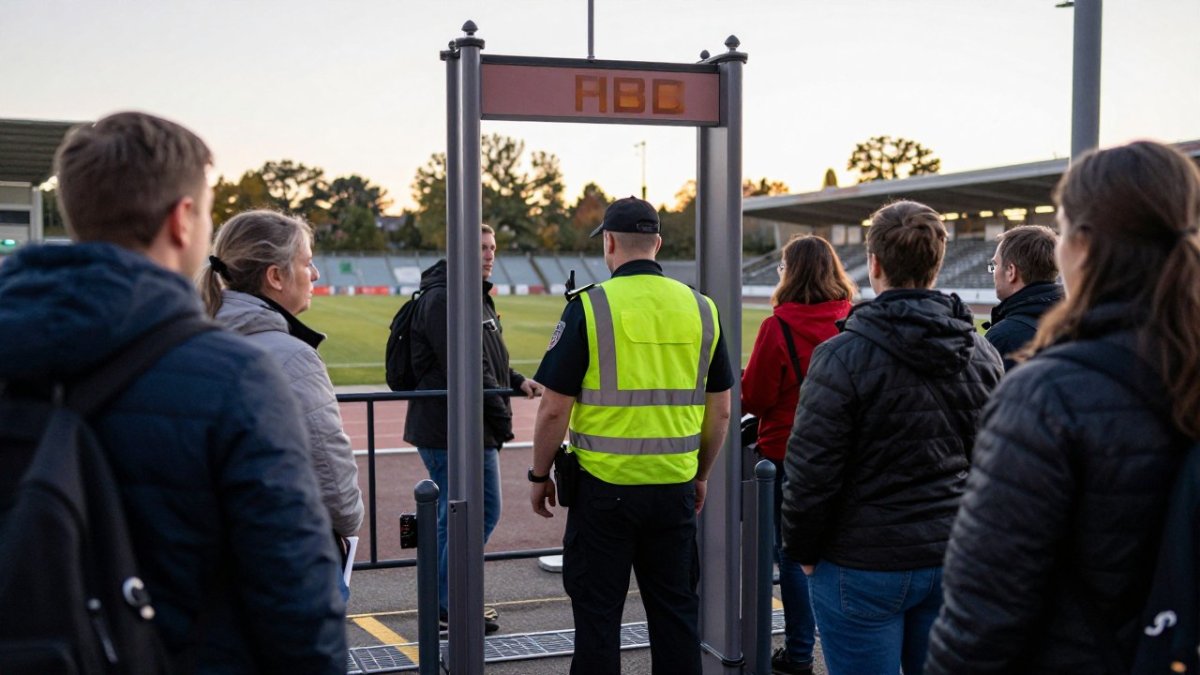
Throughput is where walk-through units earn their place. A single archway can process a steady stream of people, while handheld screening slows each person to a sweep. The trade-off is layout: you need enough screening lanes, a clear queue management plan, and space for secondary screening when an alarm triggers.
Coverage is the other half of the equation. Because venue layout shapes coverage as much as device settings do, supplier questions should address how equipment choices fit the site, a consideration that also applies when working with Adventure Cove Store.
If queue speed is your bottleneck, our article on improving throughput at security checkpoints covers the operational tactics in detail.
What Drives Security Metal Detector Price and Total Cost of Ownership
Security metal detector price depends on unit type, detection technology, quantity, and how you acquire it, so no single figure fits every venue.
Hardware cost. Walk-through units cost more per unit than handheld wands, but they screen more people per hour.
Installation and setup. Permanent checkpoints may need mounting, power routing, and calibration.
Training. Every new device means retraining officers on alarm response and sensitivity settings.
Maintenance and support. Downtime during an event is the most expensive line item of all.
Consumables and accessories. Batteries, mats, and optional accessories add up over a season.
Acquisition model. For venues with a fixed capital budget, rental and leasing shift the math.
To compare options fairly, build a simple model: annual screening days × lanes × cost per lane per day, then add training, maintenance, and support response assumptions.
Watch out: a quote that omits setup, training, and support response time is not a total-cost comparison, and it will understate the cost of the option with the weakest support.
For a closer look at cost expectations, see what portable metal detector rental for events costs, and review the full rental options to plan a booking.
Metal Detector Rental for Events: When Renting Beats Buying
Metal detector rental for events makes sense when screening needs are seasonal, budget is constrained, or you want to trial equipment before committing. Renting beats buying when the number of screening days per year is low or the venue calendar is unpredictable.
Renting wins in these situations:
- Seasonal venues. Stadiums and arenas with concentrated event calendars avoid idle equipment.
- Budget cuts. When capital spending is frozen, rental keeps screening online without a large outlay.
- Pilots. A rental period lets staff test detection accuracy and false alarm rates before a purchase.
- Multi-site operations. Portable units move between locations without specialized installers.
Buying still wins for permanent, high-volume checkpoints like schools and government buildings, where the equipment runs daily and the long-run cost favors ownership.
For a closer look at cost expectations, see what portable metal detector rental for events costs, and review the full rental options to plan a booking.
Matching Equipment to Event Size and Risk Profile
Equipment selection should follow a simple rule: match screening capacity to crowd size and risk, not to a catalog page. A 500-person community event and a 50,000-seat arena need very different checkpoints.
Use this decision framework:
- Small events, low risk. Handheld detectors for spot checks, with a clear secondary screening area.
- Mid-size events, moderate risk. A mix of walk-through units at main entrances and handheld wands for secondary screening.
- Large-scale events, elevated risk. Multiple walk-through screening lanes, dedicated queue management, and trained security personnel at every checkpoint.
- Permanent high-traffic sites. Walk-through units purchased or leased, with a maintenance plan in place.
The risk assessment should drive the equipment, not the other way around. A venue that over-buys creates idle assets; one that under-buys creates bottlenecks and gaps in coverage.
Request a Screening Equipment Quote and Rental Plan
A quote should reflect your venue, your event calendar, and your staffing, not a generic package. The fastest way to get an accurate screening equipment quote is to bring your throughput numbers, entrance layout, and rental timeline to the conversation. You can contact METALDEFENDER.com to request a quote or rental plan.
Before you request pricing, gather:
- Expected people screened per hour at peak
- Number of entrances and screening lanes
- Event dates and season length
- Available security personnel per checkpoint
- Any compliance requirements for your facility type
From there, you can compare purchase, lease, and rental side by side and choose the model that fits your budget cycle.
Screening decisions get easier when the equipment, rental terms, and support all come from one place. Metal Defender supplies walk-through and handheld metal detection equipment with flexible purchase, leasing, and rental options, plus optional accessories and support to keep checkpoints running. If your current setup is straining at the gate, get a quote and rental plan built around your venue. Get started with Metal Defender and keep every entrance screened without a capital squeeze.
Frequently Asked Questions
What are the best alternatives to Garrett metal detectors for event security?
The best garrett alternative depends on what you screen and how often. For high-volume venue entrances, walk-through units with adjustable sensitivity and clear detection zones reduce bottlenecks. For roaming checks and secondary screening, a hand held metal detector for security work should be light, fast to alarm, and simple to redeploy. Compare alarm accuracy, setup time, accessory support, and whether the supplier offers rental or leasing, since flexible acquisition often matters more than the badge on the unit.
Are handheld or walk-through metal detectors better for event screening?
They solve different problems, and most venues use both. Walk-through security metal detectors handle the main flow at venue entrances, screening people per hour at a consistent pace. Handheld units cover secondary screening when an alarm triggers, plus bag checks, staff entrances, and roving patrols. If your queue backs up at peak entry, add lanes or walk-through capacity. If alarms are slow to resolve, add handheld units and staff training so secondary screening does not stall the line.
Can event organizers rent or lease metal detectors instead of buying them?
Yes. Metal detector rental for events suits single-date shows, seasonal venues, and trial deployments before a capital purchase. Leasing spreads cost across a longer term. Rental terms usually depend on quantity, dates, and delivery distance, so confirm lead times, pickup logistics, and who handles calibration and repairs before signing. Renting first also lets your staff test throughput and false alarm rates with your actual crowd before committing to a full purchase.
What should event staff compare when choosing a Garrett alternative?
Compare four things: detection performance, throughput, support, and acquisition terms. Ask how many people screened per hour a lane handles, how sensitivity is adjusted for items like belt buckles, and what happens when a unit fails on show day. Ask which accessories, spare parts, and training are offered and how they are priced. Finally, weigh security metal detector price against total cost of ownership, including staffing, maintenance, and storage, rather than comparing sticker figures alone.