 ultimate-guide
Walk Through Metal Detector for Schools: 2026 Guide
Table of Contents
- How Walk-Through Metal Detectors Work in a School Environment
- School Security Screening Procedures That Keep Lines Moving
- Choosing a Walk-Through Metal Detector for Elementary Schools
- Walk-Through Metal Detector Rental for Schools: When It Makes Sense
- Walk-Through Metal Detector Maintenance and Daily Testing
- Costs, Funding and Total Cost of Ownership
- Privacy, Equity and the Student Experience
- Conclusion
- Frequently Asked Questions
Last Updated: October 20, 2026
How Walk-Through Metal Detectors Work in a School Environment
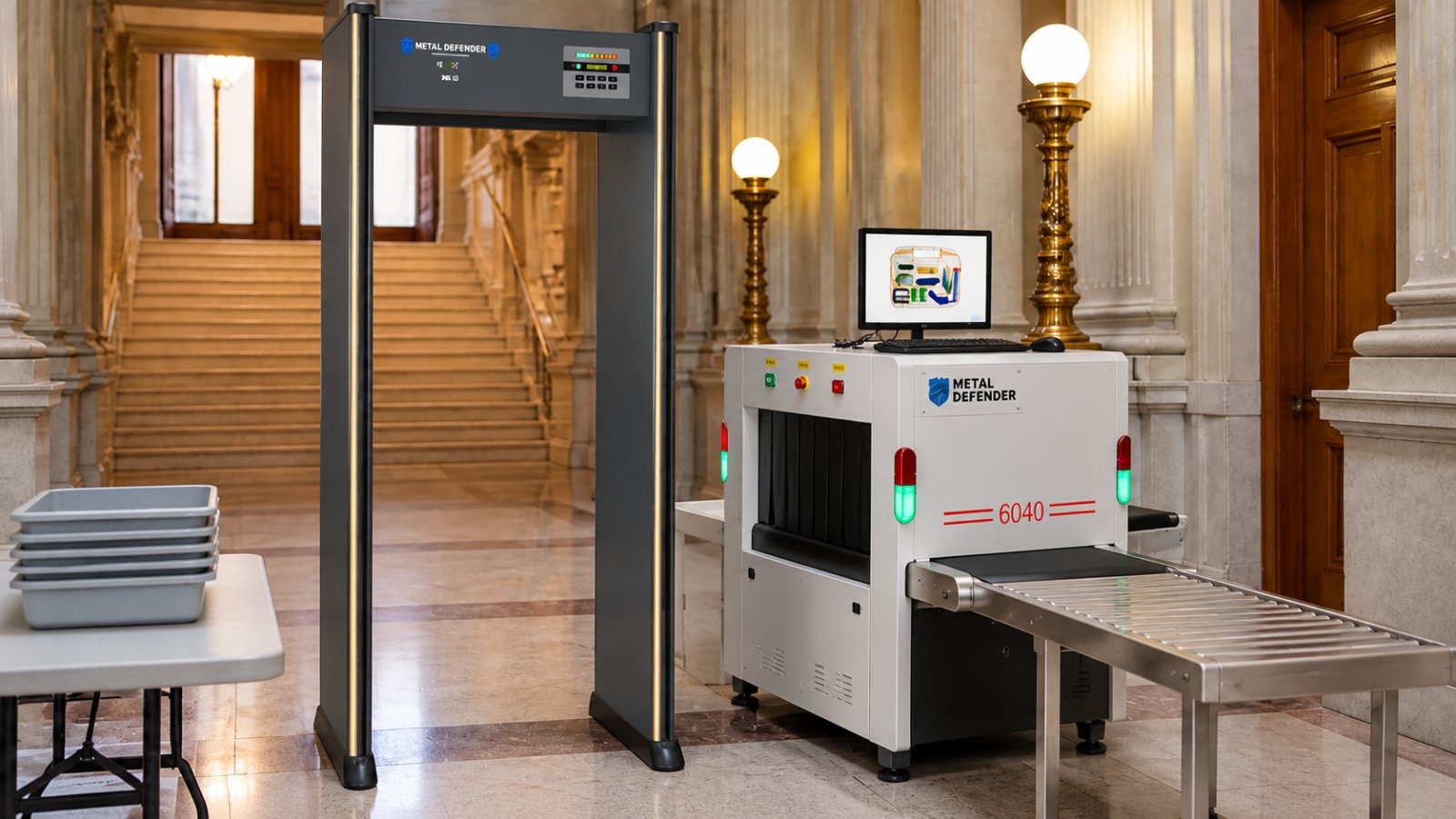
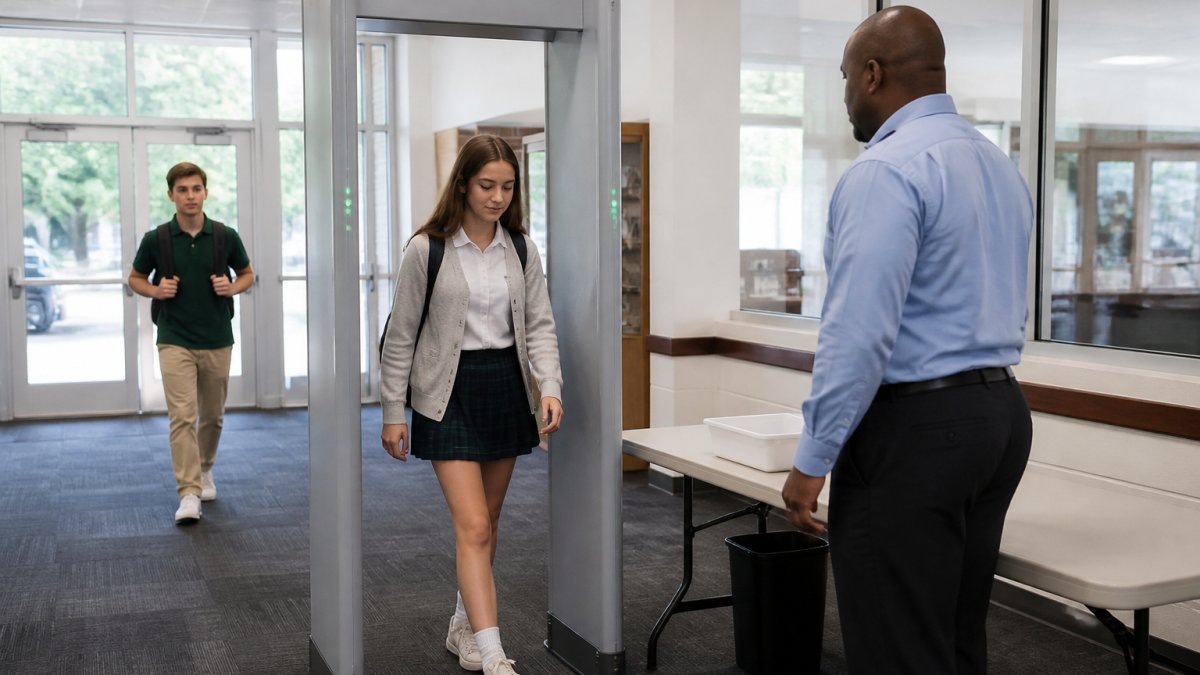
A walk through metal detector for schools is a screening checkpoint that uses low-frequency electromagnetic fields to detect metal objects on students, staff and visitors as they pass through a freestanding archway.
A transmitter coil in one side of the arch pulses an electromagnetic field, and a receiver coil on the opposite side measures the disturbance.
From Detection to Alarm Resolution
Detection is the first half of the job. Alarm resolution is the second, and it is where most school programs succeed or fail.
A typical sequence looks like this:
- A student steps through the arch at a normal walking pace.
- The unit either clears them or alarms with a zone indicator.
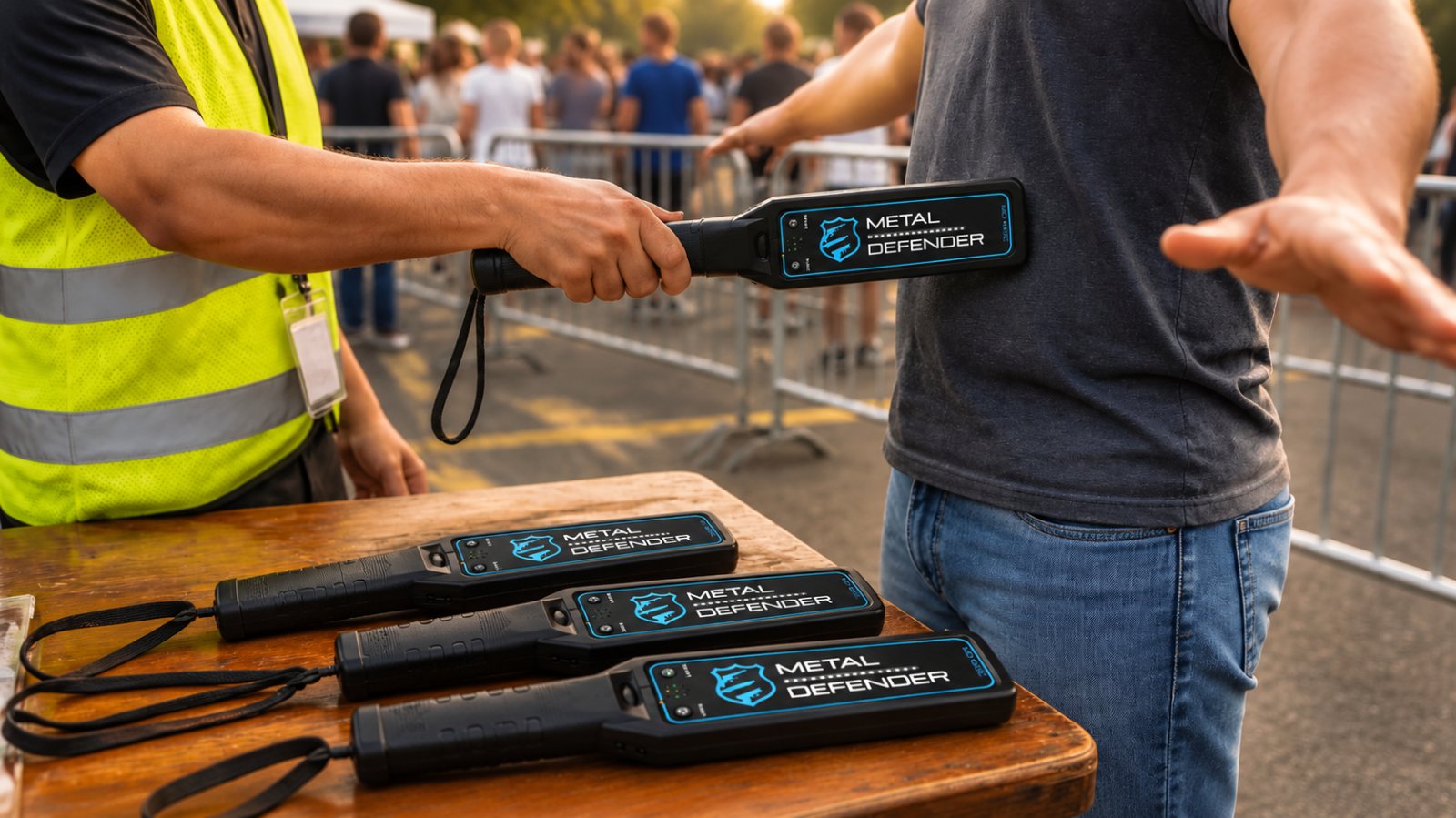
- A trained operator uses a hand-held wand to localize the source.
- The student removes or presents the item (keys, a chromebook, a belt buckle).
- The student re-passes or is cleared by the operator.
The physics matter less than the flow. A detector that alarms on every third student is technically working and operationally useless.
School Security Screening Procedures That Keep Lines Moving
The fastest way to kill a screening program is to bottleneck the entrance. A single walk-through lane moves a steady stream when the procedure is tight, but collapses under a crowd if bags, laptops and pocket contents are handled ad hoc.
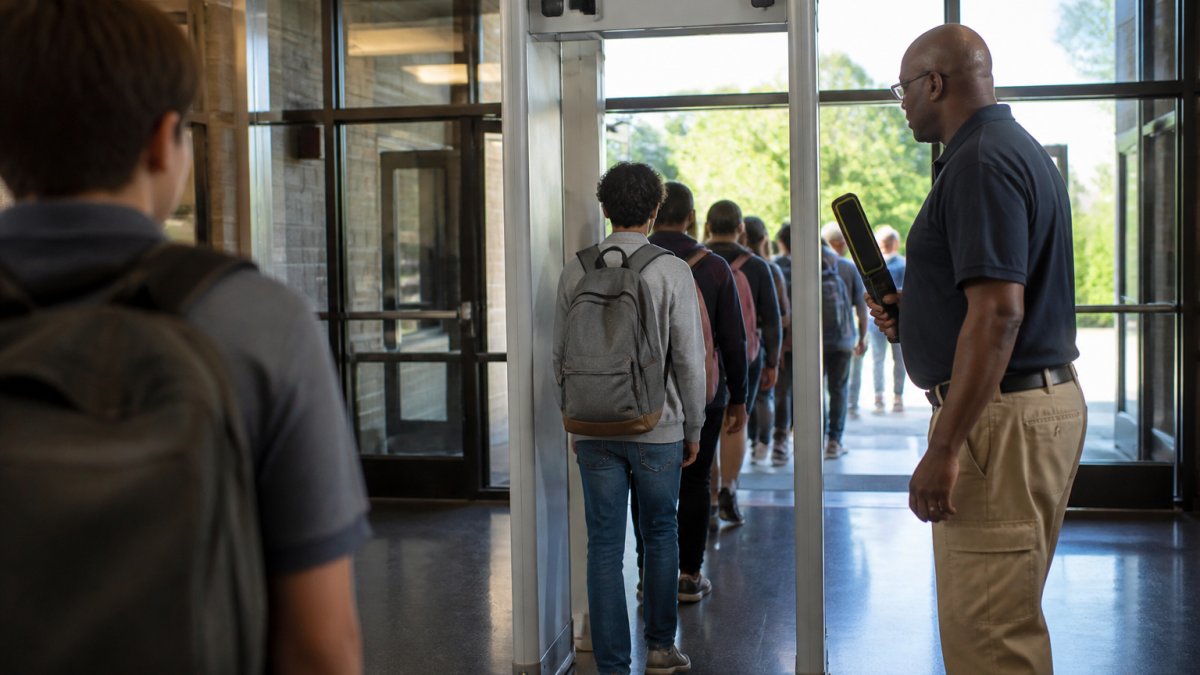
Procedure structure we recommend to districts planning entrance screening:
- Pre-screen the predictable. Ask students to remove laptops, large metal water bottles and obvious metal items before the arch. A staging table 3 metres ahead does more for throughput than any equipment upgrade.
- Separate the lanes. Visitors and staff should not queue with students. A dedicated visitor lane with sign-in and a hand-held wand keeps the main student lane moving.
- Assign roles, not just people. One operator watches the alarm display, a second handles wand resolution, a third manages the queue. Without defined roles, everyone helps and nobody owns the checkpoint.
Choosing a Walk-Through Metal Detector for Elementary Schools
Elementary screening is a different problem from high school screening. A walk through metal detector for elementary schools should prioritize adjustable sensitivity, an arch height younger students can pass comfortably, and clear audio and visual alarm cues staff can interpret quickly.
What we tell elementary administrators to weigh:
- Adjustable sensitivity and discrimination. Dial the unit down enough to ignore zippers, snaps and lunchbox clasps while still catching larger prohibited items. Units without granular discrimination force a choice between false alarms and blind spots. Ask the vendor to demonstrate the discrimination range on a test piece matching a typical elementary student's everyday carry.
- Throughput at peak. Elementary arrival windows are short and concentrated. Measure arrival volume per minute at each entrance and size lanes accordingly. A single lane that clears a steady stream of adults can stall on a class of 25 arriving together with backpacks and lunchboxes.
- Arch height and footprint. Some units are sized for adults and make younger students reach or stretch. Confirm the clear opening accommodates your youngest grade level, and check whether the unit needs fixed installation and dedicated power or can be repositioned for events, testing days or temporary needs.
Accessibility and the student experience
Elementary screening raises accessibility questions high school programs often avoid. Students who use wheelchairs, walkers or other mobility aids cannot always pass through a standard arch, so hand-held screening becomes the alternative path.
Equity also shows up in alarm rates. Metal snaps, braces and school-supplied devices all produce different alarm patterns.
For districts needing flexibility rather than a permanent capital purchase, rental and leasing options let you pilot a configuration before committing.
Walk-Through Metal Detector Rental for Schools: When It Makes Sense
A walk through metal detector rental for schools fits temporary, uncertain or budget-constrained needs, and lets a district test a configuration in a real arrival window before signing a multi-year purchase.
Situations where rental fits:
- Pilot programs. Run screening at two schools for a semester and measure throughput and alarm rates before district-wide rollout.
- Event and testing-day coverage. Standardized testing, graduation, athletics and community events create short-term screening needs that do not justify permanent equipment.
- Budget timing. If capital budget cycles do not align with the safety timeline, rental bridges the gap without waiting a year.
The trade-off is straightforward. Rental costs more per month than ownership over a long horizon and is the wrong choice if screening will be permanent, there, purchase or lease usually wins on total cost.
Walk-Through Metal Detector Maintenance and Daily Testing
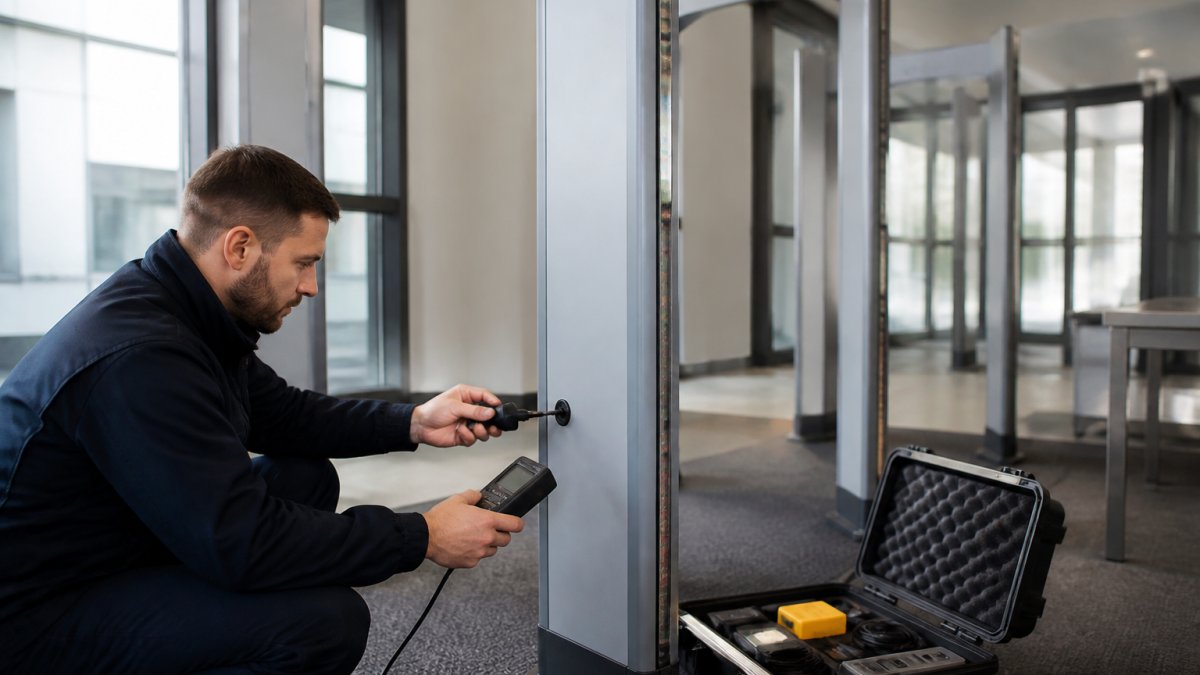
Walk-through metal detector maintenance is mostly a discipline problem, not a technical one. Units can fail quietly: a detector that has drifted out of calibration still powers on and still clears people, which can be worse than an obvious breakdown because nobody notices.
A workable maintenance routine:
Contact Us For Your Ordering & Rental Needs →
- Daily: Run a test piece through the unit at the start of every screening session and confirm it alarms. Check the display and audio. Log the result.
- Weekly: Inspect the arch and control unit for physical damage, check cabling and connectors, and confirm the power supply is stable.
- Monthly: Recalibrate against the manufacturer's reference and review alarm logs for drift or unusual patterns.
Measuring performance, not just uptime
A maintenance log tells you the unit powered on, not whether screening is working. Districts that evaluate their programs track a small set of measures weekly:
- Screening time per person. How long does it take one student to pass through the lane during peak arrival? This is the number that determines staffing and lane count.
- Alarm resolution time. From alarm to cleared student, how long does resolution take? A long resolution time is usually a procedure problem, not an equipment problem.
- False-alarm rate. What share of alarms turn out to be everyday items rather than prohibited objects? A high rate erodes student trust and slows the line.
Validating vendor claims
Detection performance claims are hard to compare across vendors because test methods vary.
Support matters here. Ask any provider what happens when a unit goes down: response time, spare parts availability, and whether they supply a loaner while yours is serviced.
Costs, Funding and Total Cost of Ownership
Pricing for walk-through metal detection depends on the number of lanes, the detection technology, installation requirements, accessories and the acquisition model you choose, so we do not publish fixed figures.
Total cost of ownership extends well beyond the equipment:
| Cost category | What to budget for | Ongoing? |
|---|---|---|
| Equipment | Walk-through units, hand-held wands, accessories | One-time or lease |
| Installation | Power, mounting, site preparation | One-time |
| Staffing | Operators and resolution staff per lane, per session | Recurring |
| Training | Initial and refresher operator training | Recurring |
| Maintenance | Daily testing time, service contracts, parts | Recurring |
| Consumables | Test pieces, signage, replacement components | Recurring |
Staffing is usually the largest recurring line and the one most often left out of early budgets.
Funding sources vary by district and state, and we recommend confirming eligibility with your state education agency and any applicable federal school safety grant programs before committing.
Privacy, Equity and the Student Experience
Screening changes the school day, and how it is implemented determines whether students experience it as routine safety or as suspicion. That is a policy question, not an equipment question, but equipment choices affect the answer.
Considerations we raise with every K-12 client:
- Dignity in the process. Wand resolution should happen out of the main sightline where possible, and staff should be trained on respectful, consistent language.
- Equity in alarm rates. Different clothing, accessibility devices and medical implants produce different alarm patterns. A policy that treats every alarm as suspicion will fall hardest on specific groups of students. Build an exception process for known medical devices and accessibility equipment.
- Accessibility. Ensure the screening lane accommodates wheelchairs, mobility aids and students who cannot walk through unaided. Hand-held screening provides the alternative path.
Conclusion
The hardest part of school screening is not choosing a detector. It is building a procedure, staffing model and maintenance routine that hold up. Planning for this reality can lead to effective screening.
Metal Defender supplies walk-through and hand-held detection equipment with flexible purchase, lease and rental options, plus optional accessories and support. If you are planning a screening program or replacing a configuration that is not holding up, contact us for your ordering and rental needs and we will help you size the lanes, the procedure and the support plan to your actual arrival volume.
Frequently Asked Questions
Are school metal detectors effective?
They reliably detect larger metal objects such as firearms and knives when the detector is set correctly and alarms are resolved by trained staff. They are less reliable against small blades and non-metal threats, and their value depends on consistent procedures, testing and staffing. Treat a walk through metal detector for schools as one layer of a wider safety plan that includes threat assessment, supervision and visitor controls, not as a standalone fix.
How do walk-through metal detectors work in schools?
A walk through metal detector sends a low-level electromagnetic field through its archway. Metal objects disturb that field, and the unit sounds an alarm or shows a zone indicator. Staff then use a handheld wand to locate the item and follow school security screening procedures for resolution.
What should schools consider when choosing a walk-through metal detector?
Start with throughput at your busiest entrance, then check detection accuracy and how the unit handles everyday metal such as chromebooks, keys and buckles. Confirm installation needs, power and network access, warranty terms, spare parts and response time for repairs. Ask for references from comparable schools. Pricing depends on quantity, configuration and delivery, so request a quote rather than relying on list prices.
Can walk-through metal detectors be used in elementary schools?
Yes, but the setup should differ from a high school. A walk through metal detector for elementary schools works best with lower sensitivity settings, shorter screening windows and staff who explain the process to young children. Place the unit where parents can see it, keep a handheld wand for secondary checks, and plan how small students move through without crowding. Random screening is often a better fit than screening every child every day.
How often should school metal detectors be tested and maintained?
Test each unit at the start of every school day with a known test piece, and log the result. Schedule a fuller calibration and inspection monthly or per the manufacturer's guidance, and check cables, power, alarms and zone indicators weekly. Walk-through metal detector maintenance should also cover software updates and staff refresher training. Keep a spare handheld wand on site so screening continues if one unit goes offline.
What training do school staff need to operate metal detectors?
Operators need practice in alarm resolution, wand technique, respectful communication and de-escalation, plus a clear escalation path to administrators or school resource officers. Train on the actual equipment and settings you will use, and run a live drill before the first screening day. Refresher sessions each term keep false alarms low and help staff apply school security screening procedures consistently across entrances and shifts.
Do schools need to rent or buy metal detectors?
Buying suits permanent checkpoints with predictable daily use. A walk-through metal detector rental for schools fits short-term needs such as a specific event, a temporary threat period or a pilot before a capital purchase. Rental also lets you test throughput and false alarm rates with your own students before committing. Ask about delivery, setup, training and support in the rental quote.