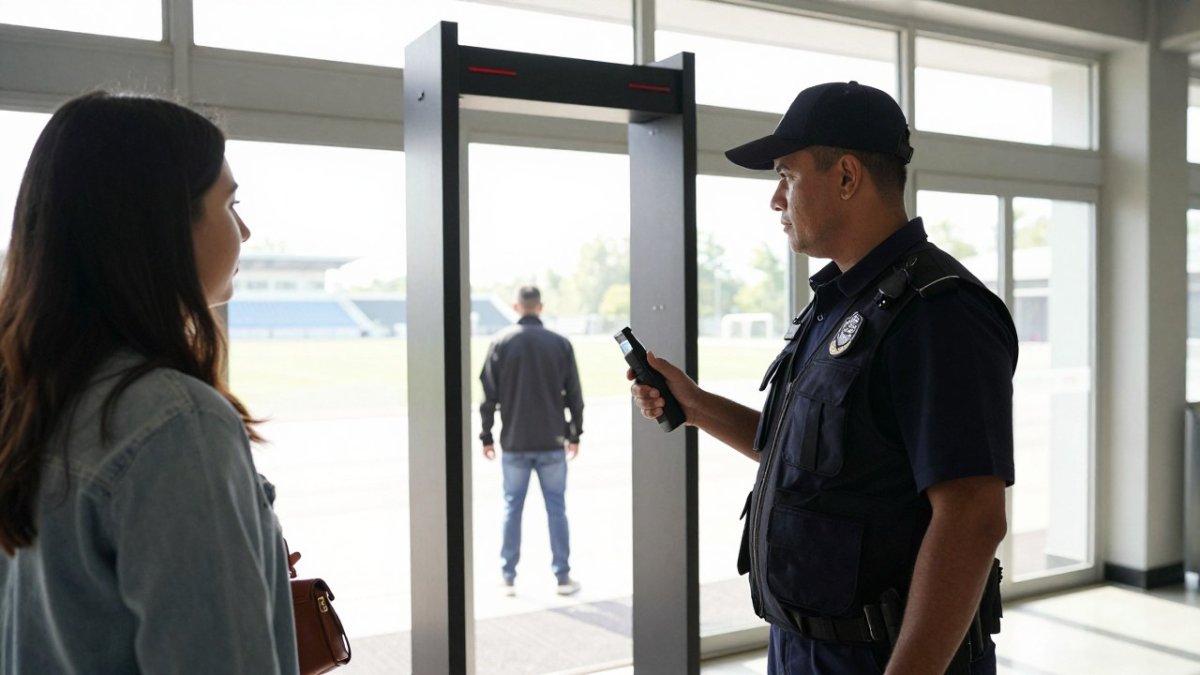
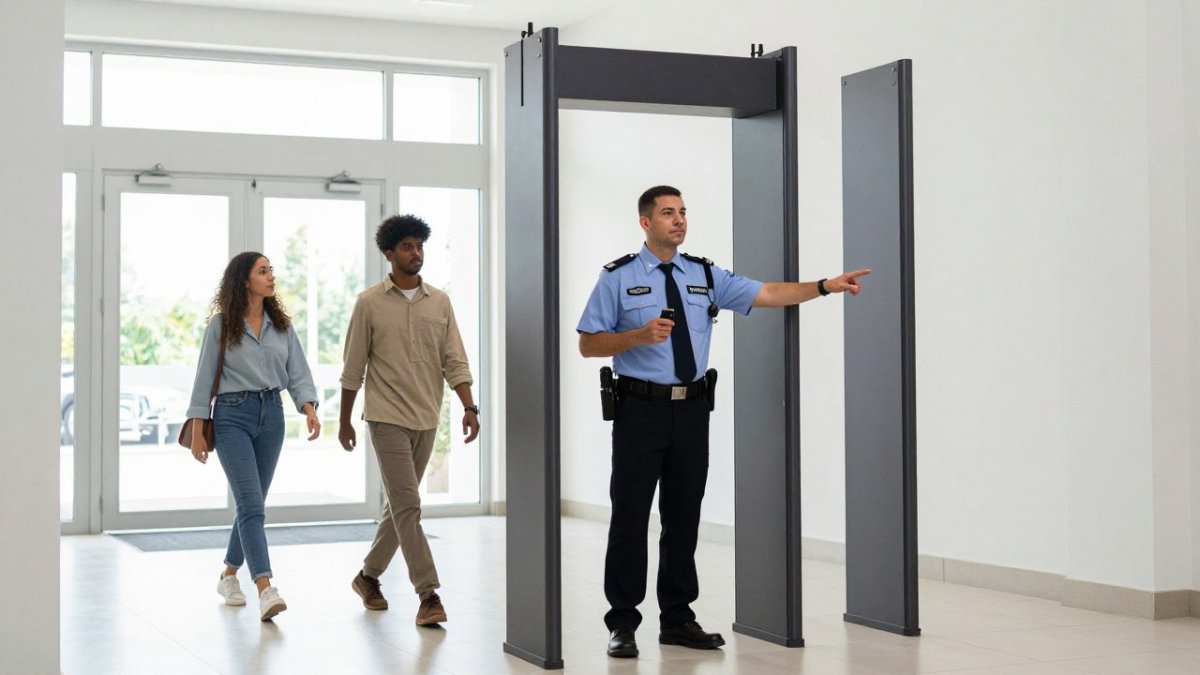
 Comparison
Metal Detector Leasing Options for Businesses in 2026
Last Updated: October 23, 2026
Quick Summary
Metal detector leasing is an acquisition model where a business pays a recurring fee to use screening equipment for a defined term instead of buying it outright. Leases typically bundle hardware, installation, calibration, and maintenance into one predictable monthly payment, making them best suited to organizations that screen continuously at fixed entry points.
- Choose your acquisition method based on duty cycle, not purchase price.
- Rental suits deployments measured in days or weeks, such as events and seasonal screening.
- Most business leases carry minimum terms of twelve to thirty-six months for walk-through units.
- Size equipment to your peak hour throughput, not your daily average.
- Confirm fleet size, service coverage, and guaranteed response windows before choosing a provider.
Table of Contents
- Metal Detector Leasing Options for Businesses: The 2026 Landscape
- Why Acquisition Method Decides Your Screening Program
- Metal Detector Rental for Businesses: Short-Term, Seasonal, and Event Use
- Walk-Through Metal Detector Leasing: What It Covers and Who It Suits
- Lease vs. Buy Security Equipment: A Side-by-Side Comparison
- Metal Detector Lease Terms and Maintenance: What to Check Before Signing
- Matching Equipment to Your Application: Throughput, Sensitivity, and Compliance
- Choosing a Provider: Fleet Size, Service Coverage, and Support Response
- Conclusion
- Frequently Asked Questions
Metal Detector Leasing Options for Businesses: The 2026 Landscape
Metal detector leasing is an acquisition model in which a business pays a recurring fee to use screening equipment for a defined term instead of buying it outright.
A venue screening six event weekends a year and a school screening every student every morning have almost nothing in common except the hardware. Treating them the same way is where budgets go wrong.
Why Acquisition Method Decides Your Screening Program
The biggest mistake buyers make is shopping for equipment before deciding how they will pay for it. Acquisition method determines maintenance coverage, upgrade path, cash flow, and exit speed.
A purchase puts the asset on your books and hands you the service burden. A rental keeps commitment low but rarely matches that support depth.
Each route carries a different risk profile:
- Purchase: highest upfront outlay, full ownership, you arrange maintenance
- Lease: predictable monthly cost, defined term, service often included
- Rental: shortest commitment, best for temporary needs, limited customization
Get it wrong and you'll either overpay for unused capacity or scramble for service cover mid-term.
Metal Detector Rental for Businesses: Short-Term, Seasonal, and Event Use
Metal detector rental for businesses suits deployments measured in days or weeks, keeping cost proportional to actual use.
A stadium hosting a concert series, a conference center running a three-day expo, or a district screening for one graduation ceremony would otherwise store and service hardware that sits idle most of the year.
Rental Periods and What Drives Rental Rates
Rental pricing depends on duration, equipment type, delivery distance, and support level. Most providers quote daily, weekly, and monthly rates, with per-day cost dropping as the term lengthens; seasonal agreements cover recurring event calendars without re-booking.
Ask these questions before accepting a rental quote:
- Does the rate include delivery, setup, and collection?
- Is on-site technical support included or billed separately?
- What happens if equipment fails mid-event?
Walk-Through Metal Detector Leasing: What It Covers and Who It Suits
Walk-through metal detector leasing fits organizations that screen people continuously and want the equipment serviced without owning it.
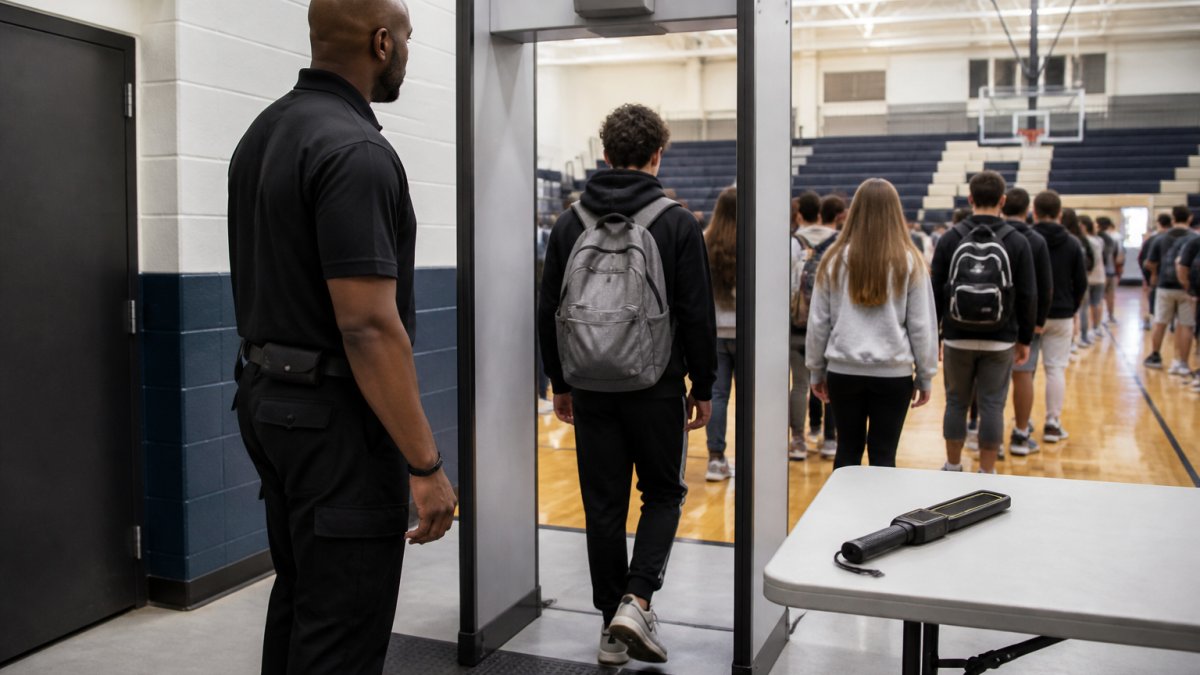
This model suits K-12 districts implementing permanent entry screening, government facilities with public access points, and high-traffic venues needing consistent throughput.
Walk-through units differ in detection sensitivity, throughput, and interference handling.
Metal Defender provides walk-through and hand-held detection equipment through direct sales, leasing, and rental.
Lease vs. Buy Security Equipment: A Side-by-Side Comparison
Lease vs. buy security equipment comes down to three variables: how long you need the equipment, how much capital you want tied up, and how much service burden you can absorb. Neither option wins universally.
| Factor | Lease | Buy | Rent |
|---|---|---|---|
| Upfront cost | Low | High | Lowest |
| Commitment length | Fixed term | None after purchase | Days to months |
| Maintenance | Usually included | Your responsibility | Usually included |
| Upgrade path | At term end | Sell and rebuy | Immediate |
| Best for | Continuous screening | Long-life fixed sites | Temporary and event use |
| Budget treatment | Operating expense | Capital expense | Operating expense |
Total Cost of Ownership Across a Three-Year Horizon
Total cost of ownership is where the comparison gets honest. A purchase price is only the entry ticket; add maintenance, calibration, repairs, spare parts, training, and storage, and the real number often surprises buyers who compared sticker prices alone.
Over three years, a lease usually costs more in raw payments than a purchase, but caps service exposure and eliminates resale risk. A purchase costs less overall if the equipment runs hard for years and rarely fails. Rental costs the most per day but the least in total when the need is genuinely short.
Build your own comparison with this framework:
- Estimate the number of screening days per year
- Add expected maintenance and calibration costs to the purchase figure
- Total the lease payments across the full term, including any end-of-term fees
Metal Detector Lease Terms and Maintenance: What to Check Before Signing
Metal detector lease terms and maintenance clauses decide what you actually pay over the contract's life. The headline monthly figure is rarely the whole story, so here is how each clause works and how to negotiate before you sign.
The Anatomy of a Business Metal Detector Lease
A commercial lease typically bundles four cost layers into one payment: hardware, scheduled preventive maintenance, unscheduled repair coverage, and software or calibration updates. Knowing which layers are included, and which are billed separately, is the most important negotiation lever.
Ask the provider to break the monthly figure into these components in writing. A lease that looks cheaper but excludes calibration visits or replacement parts is often more expensive by year two.
Contact Us For Your Ordering & Rental Needs →
Contract Clauses That Change the Real Cost
Read these clauses closely before signing:
- Service response time: what's the guaranteed window for a technician visit, and is it measured from your call or from dispatch? A four-hour response that starts at dispatch can mean a full day of downtime.
- Uptime guarantees: is there a service credit if the equipment falls below an agreed availability threshold? Ask how uptime is measured and who tracks it.
- Consumables and accessories: what's included versus billed, hand-held wands, test pieces, batteries, and mounting hardware are common add-ons.
Minimum Terms, Deposits, and End-of-Term Options
Most business leases carry a minimum term, commonly twelve to thirty-six months for walk-through units, because the provider amortizes installation and service costs. Shorter terms usually cost more monthly. Expect a security deposit or first-and-last structure, and confirm refundability conditions.
End-of-term options typically fall into four buckets: return, renew at a renegotiated rate, upgrade, or purchase at a stated residual value. Get the residual value formula in writing at signing, it is the clause most often disputed.
Service-Level Commitments That Actually Protect You
A lease with a generous headline rate and a weak service clause can cost far more than a slightly higher rate with strong uptime protection. For a school screening students every morning, a week of downtime is an operational failure, not an inconvenience.
A practical service-level agreement should specify the response window for remote diagnosis versus on-site visit, loaner or replacement units during repair, support staffing hours, and the credit mechanism if the provider misses the window.
A Negotiation Checklist for Business Buyers
- Get the monthly payment broken into hardware, maintenance, and support components
- Confirm the preventive maintenance visit count and what each visit covers
- Write the response-time clock definition into the contract
Matching Equipment to Your Application: Throughput, Sensitivity, and Compliance
Equipment specifications must match the application, or the contract is wasted regardless of how good the terms are. Three factors decide fit: throughput, detection sensitivity, and compliance requirements.
A Decision Matrix for Common Business Applications
Use this matrix to narrow the equipment category before you discuss lease terms. It compares the main detector types by how they handle product, throughput, and detection need.
| Detector type | Typical application | Throughput profile | Detection focus | Lease-fit notes |
|---|---|---|---|---|
| Walk-through (portal) | People screening at entrances, schools, venues, government buildings | High volume, continuous flow | Weapons and large metal objects on persons | Fixed installation; service and calibration clauses matter most |
| Hand-held (wand) | Secondary screening, roving patrols, backup at checkpoints | Low to moderate, operator-paced | Targeted re-check of alarms | Often bundled with walk-through leases; confirm replacement and battery terms |
| Conveyor-mounted | Food production and packaged goods inspection | Matches line speed | Contamination and foreign objects in product | Hygiene and validation documentation required; service response critical to line uptime |
| Pipeline / gravity-fall | Bulk and granular food or material flows | Matches process flow | Contamination in loose or flowing product | Specialized installation; confirm provider supports your product type |
Throughput: Matching Capacity to Your Peak, Not Your Average
Throughput is how many people or products pass a checkpoint per hour. Size equipment to your peak hour, not your daily average, a venue handling thousands of entrants in a two-hour window needs fast cycle times and hand-held backup, while a warehouse screening at shift change can often use fewer units with staggered entry.
Ask the provider for the unit's tested throughput rate and confirm whether that figure assumes single-file flow or includes secondary screening time. The gap between marketing throughput and real-world throughput is where under-specified leases cause problems.
Sensitivity: Reducing Nuisance Alarms Without Weakening Security
Detection sensitivity determines what the equipment catches and how often it false-alarms. Belt buckles, jewelry, and phones trigger detectors constantly if sensitivity is set poorly; the right configuration plus operator training reduces nuisance alarms without weakening security.
For people screening, ask how many sensitivity zones the unit offers and whether settings can be adjusted by shift or event type. For product inspection, ask about detection threshold for specific metal types (ferrous, non-ferrous, stainless steel) and whether the unit supports product-effect compensation for wet or salty foods.
Compliance and Validation for Regulated Environments
Compliance matters most in food production and regulated environments. Food businesses screening for contamination need equipment meeting hygiene and validation standards, and the lease should document it.
For security screening at public buildings, check that the equipment aligns with your facility's access-control policy and that operator training records are maintained. A lease that includes training and documentation support is worth more than a slightly cheaper one that leaves compliance to you.
Questions to Ask Before You Commit to a Specification
- What is the tested throughput rate, and does it include secondary screening?
- How many sensitivity zones does the unit have, and can settings be adjusted?
- For food applications, what documentation supports validation and audit?
Choosing a Provider: Fleet Size, Service Coverage, and Support Response
Provider selection is where most buyers underinvest their attention. Equipment is broadly comparable; service coverage and response time are not.
A large fleet means better availability for fast replacements or short-term event units; thin fleets leave you waiting.
Support response matters most in practice.
Metal Defender supplies walk-through and hand-held detectors with optional accessories and flexible acquisition through sale, lease, or rental.
Conclusion
The hardest part of metal detector leasing isn't finding equipment. It's matching the contract to how your site actually operates, then locking in service terms that protect you when something fails.
Metal Defender offers walk-through and hand-held metal detection solutions with flexible leasing and rental options, optional accessories, and support built around your screening schedule. Contact us for your ordering and rental needs and we'll help you choose the right configuration for your site.
Frequently Asked Questions
What is the difference between leasing and renting a metal detector?
Renting covers a short period, from a single event to a few months, and usually includes delivery, setup, and pickup. Leasing runs for a fixed term, often 12 to 36 months, and bundles the equipment with maintenance and technical support for the life of the contract. Renting suits temporary needs like a concert or a seasonal surge, while metal detector leasing suits venues, schools, and warehouses that screen people every day. Both avoid a large upfront capital purchase, but only a lease typically includes scheduled maintenance and service response commitments.
Is it cheaper to lease or buy security screening equipment?
It depends on how long you will use the equipment. Buying wins on total cost of ownership when you screen daily for five years or more, because you stop paying after the purchase and only cover maintenance. Leasing spreads the cost into predictable monthly payments and shifts maintenance and service response to the provider, which matters when your budget is capped or your security plan may change. Run the numbers over your realistic horizon, including installation, technical support, and maintenance, before deciding. Ask for a quote covering both paths.
Can a business lease walk-through metal detectors for a temporary security need?
Yes. Walk-through metal detector leasing and short-term rental both cover temporary needs, and providers typically scale terms to the duration. For a one-week event, a rental period is usually the better fit. For a multi-month construction site or a temporary entrance during renovation, a short lease with delivery and setup included keeps costs predictable. Confirm availability against the equipment fleet early, especially for high-traffic dates, and check whether installation, operator training, and 24/7 service are part of the agreement or billed separately.
What should a business check before signing a metal detector lease?
Check five things. First, the term and any early termination penalty. Second, what maintenance covers, including response time and whether loaner equipment is provided during repairs. Third, whether delivery, installation, setup, and operator training are included. Fourth, detection sensitivity specifications and how they fit your throughput, since false alarms from belt buckles and jewelry slow entry lines. Fifth, compliance documentation if you operate in food production or a regulated facility. Get the service response time in writing, because screening that goes offline for weeks is worse than no plan at all.